

Watching Gaza — etc.
The digest: including postcards of a German winter + an old letter on eating for a warming planet + readings + joy, wherever it can be found.
However you found your way here, welcome! I’m Emily, and I write letters about how we seek and tell stories to make sense of a changing world and our place in it.
It’s a strange contradiction: the last months of 2023 have felt so full, and yet, idle at the same time? Full with reunions back on W.C.’s side of the world and the traveling required to get to friends and family, recovering from flu-like symptoms twice (the second bout Covid), and using all the time in between not dedicated to the everyday architecture of life to read, dream, plan, agonize, write. I felt like I never had enough time but also like I had days ahead of me. It had a lot to do with all the activity going on in my head: a constant churn—because of what’s still happening in Gaza; because I feel like I’m at another crossroads, feeling a desire to shift into a different gear, trying to determine exactly what and how.
Meanwhile, I’m back in KL. But aside from frequenting a cafe for lunch, I’ve been keeping my solitude eating, sleeping, reading, and writing. I’ve just emerged from the after-effects of Covid (they lingered this time) and jetlag, each seemingly made worse by the other. But the cloud has lifted, and I’m looking forward to getting back into the balmy rhythm of life here again: taking my dogs to the park, catching up with friends and family, revisiting old haunts and exploring new parts of the city and the rest of the country, learning again—always, over and over again—how to belong back to it.
So, this letter feels less like a start to 2024, more like a cap on 2023. There’s some rethinking I need to do so I can move along, but I’ll see you here again soon.
New letter:
Watching Gaza from Berlin
It’s crazy to me how this letter, written in November, remains relevant:
Yes, a lot about what’s happening right now remains uncertain. So much is contested, so much “we said–they said” is being lobbed around. But what at least seems clear is the mass scale of destruction, killings, and displacement that is being wrought in Gaza, even if one were to quibble about exact numbers. And in any case, for those who feel they can’t commit to believing in any one reality because the situation is so divisive and the facts on the ground so unclear, isn’t that more reason to support calls for a ceasefire? So that various parties like international humanitarian organizations and journalists can be allowed to enter Gaza and begin to ascertain what’s really going on, which can’t happen when it is being carpet bombed and isolated from the rest of the world? At the moment, it feels like we are wasting previous time arguing over justifications that we are not even sure are true...
One season into the next

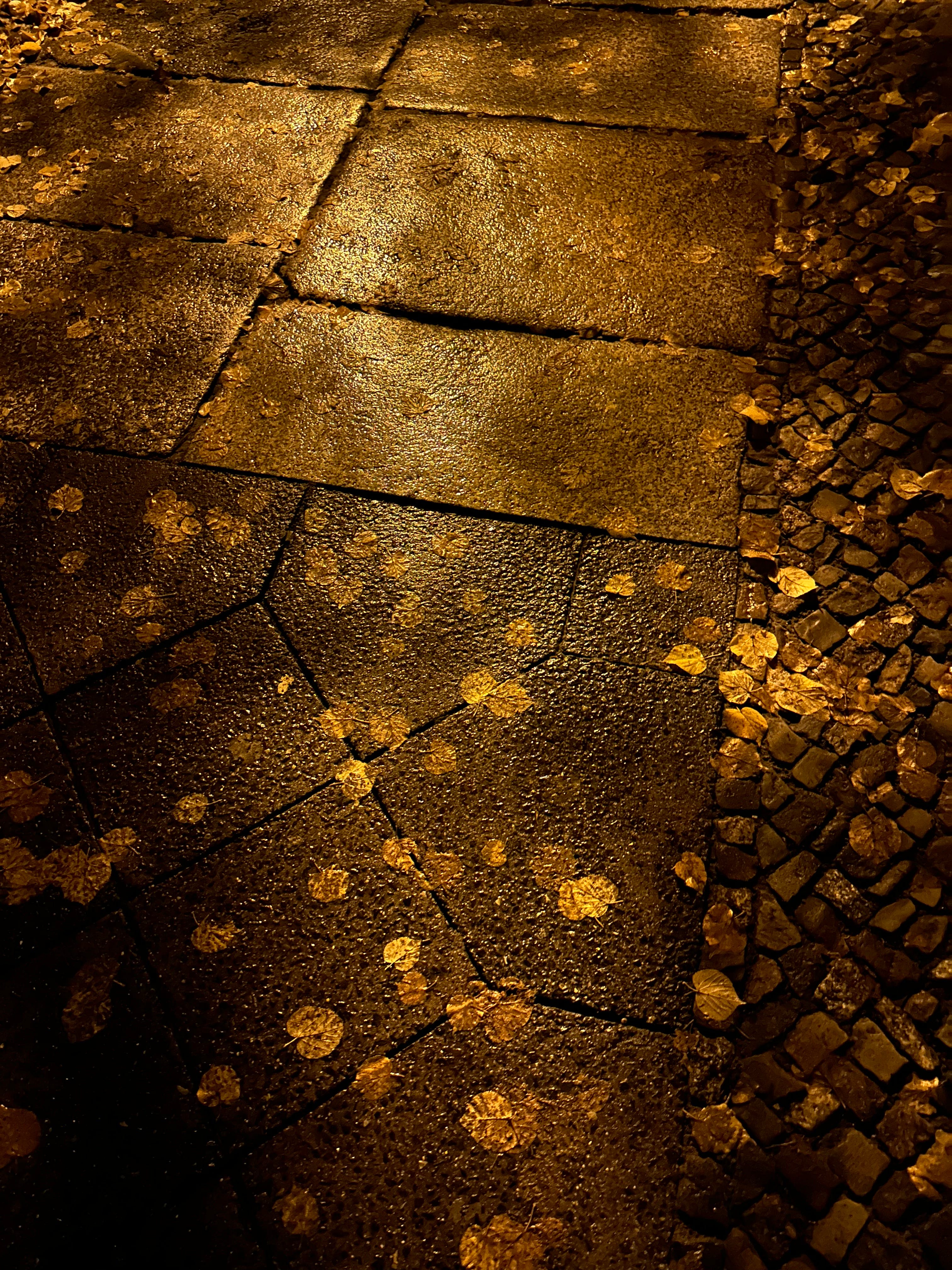
I've been wanting to write about Berlin. Not so much on the level of serious journalistic curiosity yet (though there’s plenty keeping me curious), but more a kind of personal accounting, how I came to it and how I’ve started to inhabit it. Often, though, when you know a place will play a larger role in your life in times to come, is beginning to, when every return builds on the last one, it can be a more complicated task to put into actual words how you feel about it. I’ll come around to it soon enough, perhaps in the order of fragments, as that has been my only experience of the city, but for now, here’s a belated photodrop to round up the end of 2023...
Something I wrote before
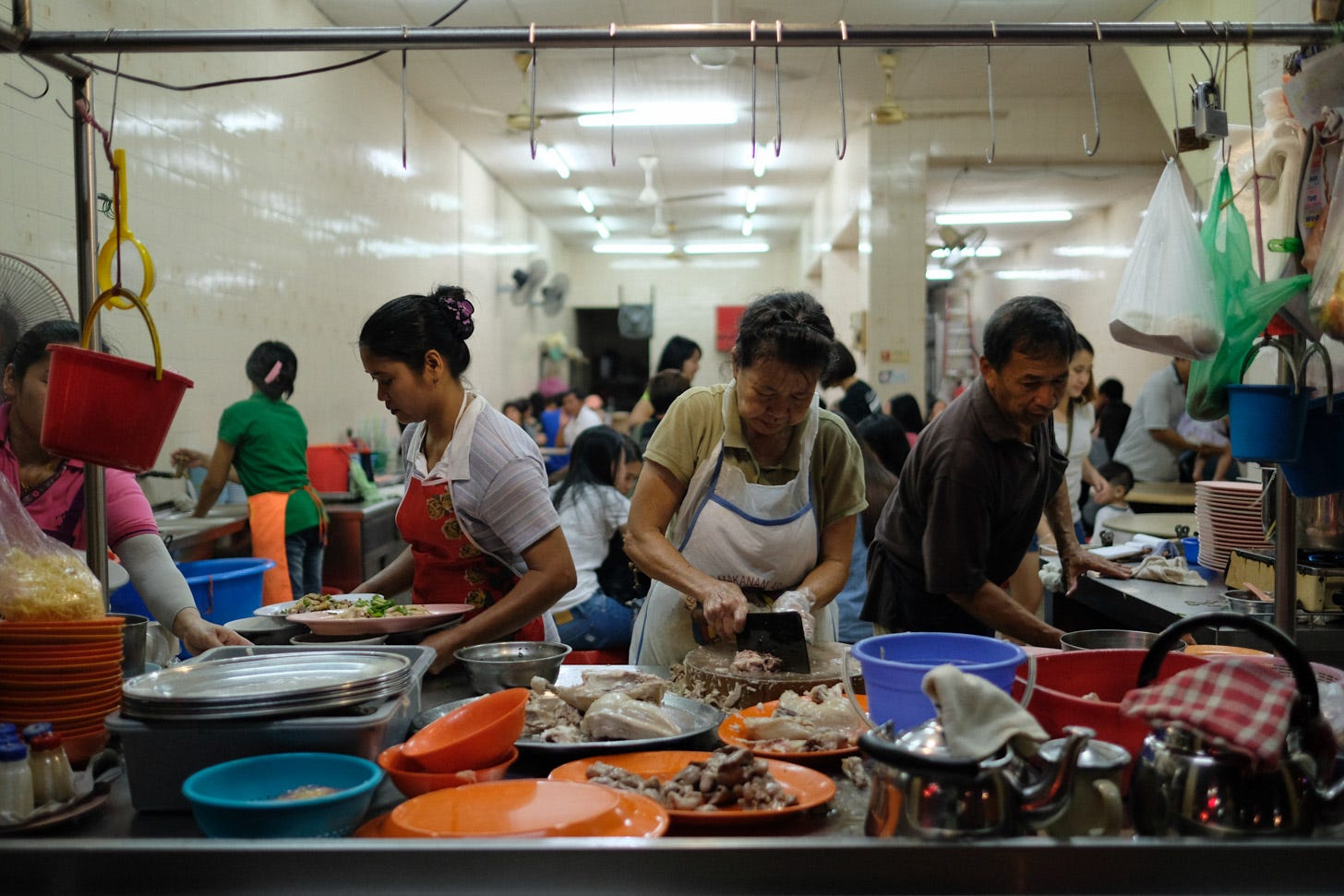
Simply: good food was a joy, a gift, from the people who made it, and I felt no need to demystify it. When I was a child, my father would grin and point out the uncle perspiring through his thin shirt at our favorite nga choy gai stall in Ipoh—serving poached chicken and blanched beansprouts, with kway teow soup—and say, See, how he puts his sweat into it? That’s the secret sauce that can’t be replicated. Every time, I knew that was a lie but I would nod and laugh. I was happy just to marvel, and dig in.
These days, that has changed for me, as I sense it has for others too. First, a percolating awareness that how we eat directly impacts our warming planet as the climate crisis began to lead the news agenda, then bulldozed into one’s daily consciousness when the pandemic hit and restaurants and supply chains faltered, thrusting concerns about our food security and long-held assumptions about how we eat into the spotlight.
Something I loved

I was just combing through my bookshelves again—fair to say I do that every time I come home—and found this True Story piece, published in print by the same people at Creative Nonfiction magazine (not sure what’s going on there these days) a while back, which I loved. As the name says, each issue features just one true story: Where am I? by Heather Sellers.
This piece is about how she struggles, really struggles, to find her way due to an inability to read her physical and spatial surroundings—linked perhaps to her face blindness? but maybe also the way she grew up?—and her attempts to cope with it. She also writes movingly about how she learns to grant herself the same compassion she so generously bestows on others with similar difficulties.
I don’t struggle to the same extent but I am sympathetic to her troubles because I can find it difficult to find my way around without a map. I don’t do as well with verbal directions; I insist on an address so I can map out my route—even in the days before GPS; even when, for a long time, people like my parents were more inclined to use landmarks for directions and didn’t necessarily even know street names. If I’m not visiting a place regularly, I’ll soon forget how to get there, even if I once spent every day frequenting it for a year. If someone diverts me onto an alternative route to someplace I’ve been, I’ll likely get disoriented and lose my bearings. By contrast, a cousin of mine could direct our grandparents to his kindergarten when he was just five years old. So, maybe it’s really not about one’s awareness per se, but that our brains are wired differently, mysteriously? Or okay, maybe I just spent too many of my formative years sticking my nose into books in moving vehicles…😁 Anyway—
Way-finding requires ongoing effort, practice, review. Some humans are excellent navigators because they automatically perceive and process visual clues provided by objects and landscapes. Others don’t rely as much on space and geometry; they create a holistic landscape out of stories, feelings, and memories in order to understand, access, and execute a route. Some people “just know” how to get across campus and back to their car. I have very limited abilities in any of these realms, but I have developed another set of skills.
I know how to remain calm. I know how to ask questions. I have my paperwork in order.
Joy is not a crumb
Affinities, etc.
Currently reading: I’ve been to South Korea only once—on a family trip, some twenty years ago. Aside from that experience, a penchant for Korean flavours, watching Autumn in My Heart—it seemed like the entry-level K-drama when I was a teenager?—and more recently watching Bong Joon-ho’s movies, I’m not too familiar with Korean culture. Much of what I know are stereotypes I read about or skim off Instagram, especially pertaining to plastic surgery and the imperative pursuit of beauty. Picked up Flawless: Lessons in Looks and Culture from the K-Beauty Capital by Elise Hu because it felt like it would be illuminating as to whether those generalizations are true, and it would seem they are. Their beauty treatments have also penetrated Malaysia’s skincare salons. Twice, I’ve been offered the same salmon sperm DNA injections(!) I read about in the book for my eczema- and acne-prone skin 👀—and no, I did not take it up. Call me old-fashioned, but the idea of injecting foreign matter into my body unless it’s for proper medical reasons still makes me squeamish.
Currently listening to: The Trouble with Lichen by John Wyndham, read by Vanessa Kirby, which I put on every night before bed for a week or two, setting the timer to 15 or 30 minutes. I love audiobooks! Especially when read by performers with a certain timbre of voice that evokes an aura of mystery (Kirby’s really matches this material)… but they help me sleep. Because see, without someone else’s voice in my head, mine would keep running, keeping me awake. But this means I often have to replay chapters, since I invariably fall asleep before the timer goes 😅. I find Wyndham’s stories particularly well-suited to audiobooks. The first time I listened to him (well, Stephen Fry) was The Midwich Cuckoos, during my first round of Covid two years ago—recuperating from Covid really is most conducive to listening to audiobooks. Because honestly, I don’t focus so well listening to texts; I read them much better. I can’t get the most out of a podcast or audiobook unless I’m intentionally training my focus on it, best done when I’m on a roadtrip. Similarly, when I don’t have subtitles on a film, I sometimes have to rewind parts to better absorb what was said.
The short-fiction pile-up: As I’m trying to complete a short story I started a couple of years ago, in the name of experimenting, I’m trying to read more of them. I tend to be bad at finishing short story collections, picking and choosing from them piecemeal, hopping between them. For now, I’m shuffling between The Barnum Museum by Steven Millhauser, The Elephant Vanishes by Haruki Murakami (translated by Jay Rubin), Stories of Your Life and Others by Ted Chiang, and Malaysian writer Shih-Li Kow’s new collection, Bone Weight and Other Stories. I’m trying to read them more intentionally, a project greatly helped by reading George Saunders’ newsletter too.
My 2023 in books
My favourite novel this year:
“And what is love, in the end?” Alabaster said. “Except the irrational desire to put evolutionary competitiveness aside in order to ease someone else’s journey through life?”
—from Tomorrow, Tomorrow, and Tomorrow by Gabrielle Zevin
This novel gave me, as they say, all the feels. Parts of it really moved me, and the ending made me cry. (Yes, I am the kind of person who cries at books!) Reading it, I felt like I was growing up with the characters. It’s about the compulsion to create a world of your own in a deeply imperfect one, the tricky business of collaborating with best friends, the impossibility of controlling what the world thinks of you and your work, and about how to live and love with some measure of grace in the face of things we can’t change. Definitely worth all the attention it’s been getting. More importantly, it reminds me to keep working on my ideas, and to be a nicer, less self-interested person while doing it!
A listing of other readings this year:
Sea of Tranquility marked my completion of all (but one!) of Emily St. John Mandel’s novels. It’s quite amazing how she builds tension despite her writing being ‘quiet’ and her books not being very plot-y!
Historical fiction: Lily by Rose Tremain, Matrix by Lauren Groff, and The Women of Troy by Pat Barker (the second in the ‘Regeneration’ trilogy reimagining the Trojan War through the eyes of the women)—all of which were not as plot-driven as you would expect, but still a pleasure to read.
Other novels: Yellowface by R.F. Kuang (a breathless pageturner but not too much going under the surface), Memory Police by Yōko Ogawa (elegantly written with an interesting premise, but I had a little trouble feeling propelled through it).
Memoirs & essay collections:
—I finished Deborah Levy’s ‘Living Autobiography’ trilogy (Things I Don’t Want to Know, The Cost of Living, Real Estate)—love the way she dissects life, builds meaning out of its fragments.
—How Kyoto Breaks Your Heart, a debut collection of essays by Florentyna Leow, a Malaysian food-and-travel writer based in Japan, on coming to find, in solitude, her own way through a city haunted by the spectre of a suddenly lost friendship. A lovely writer and a lovely person. I always look forward to reading her writing and to catching up when we’re in the same country!
—What My Bones Know: A Memoir of Healing from Complex Trauma by Stephanie Foo, an American with Malaysian ancestry: I don’t think I would have picked this up on my own (maybe because of a sense that there are a lot of titles that sound like this on the market right now), but it came highly recommended by three people I know, and I enjoyed it, and it made me cry.
—Stay True by Hua Tsu: as good as everyone says it is. Also great because I don’t think there are too many coming-of-age memoirs by Asian male writers?
—I Want to Die but I Want to Eat Tteokbokki by Baek Sehee: I couldn’t quite latch onto the voice, but found a fair bit in it that I related to.
Narrative journalism: Pandemic: Tracking Contagions, from Cholera to Ebola and Beyond by Sonia Shah. This really ought to be recommended reading for everyone!
Literary review: Essayism by Brian Dillon and A Little History of Literature by John Sutherland.
Photobook: Teju Cole’s gorgeously contemplative Golden Apple of the Sun, with an accompanying essay on kitchen still life. If you feel compelled to take photos of sun-lit food against the complementary hues of tabletop surfaces, this is for you.
I finished off the year with a couple of titles on Israel and Palestine: Raja Shehadeh’s We Could Have Been Friends, My Father and I and Language of War, Language of Peace (highly recommend), and Rashid Khalidi’s The Hundred Years’ War on Palestine.
Friends & Familiar Strangers
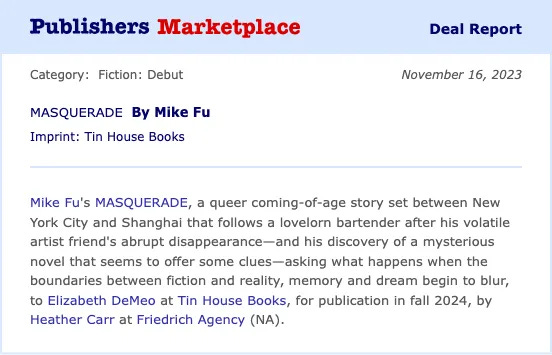
In previous newsletters, I’ve occasionally posted a shout-out to friends or people who have contributed in some way to Movable Worlds. Most recently, Mike Fu, a Chinese-American writer and editor—I spoke with him a couple of years back about his life and work and English translation of Sanmao’s Stories of the Sahara for Movable Worlds—just got himself a book deal for his debut novel, Masquerade, to be published by Tin House Books in 2024 🥳. Congrats Mike!
And I leave you with
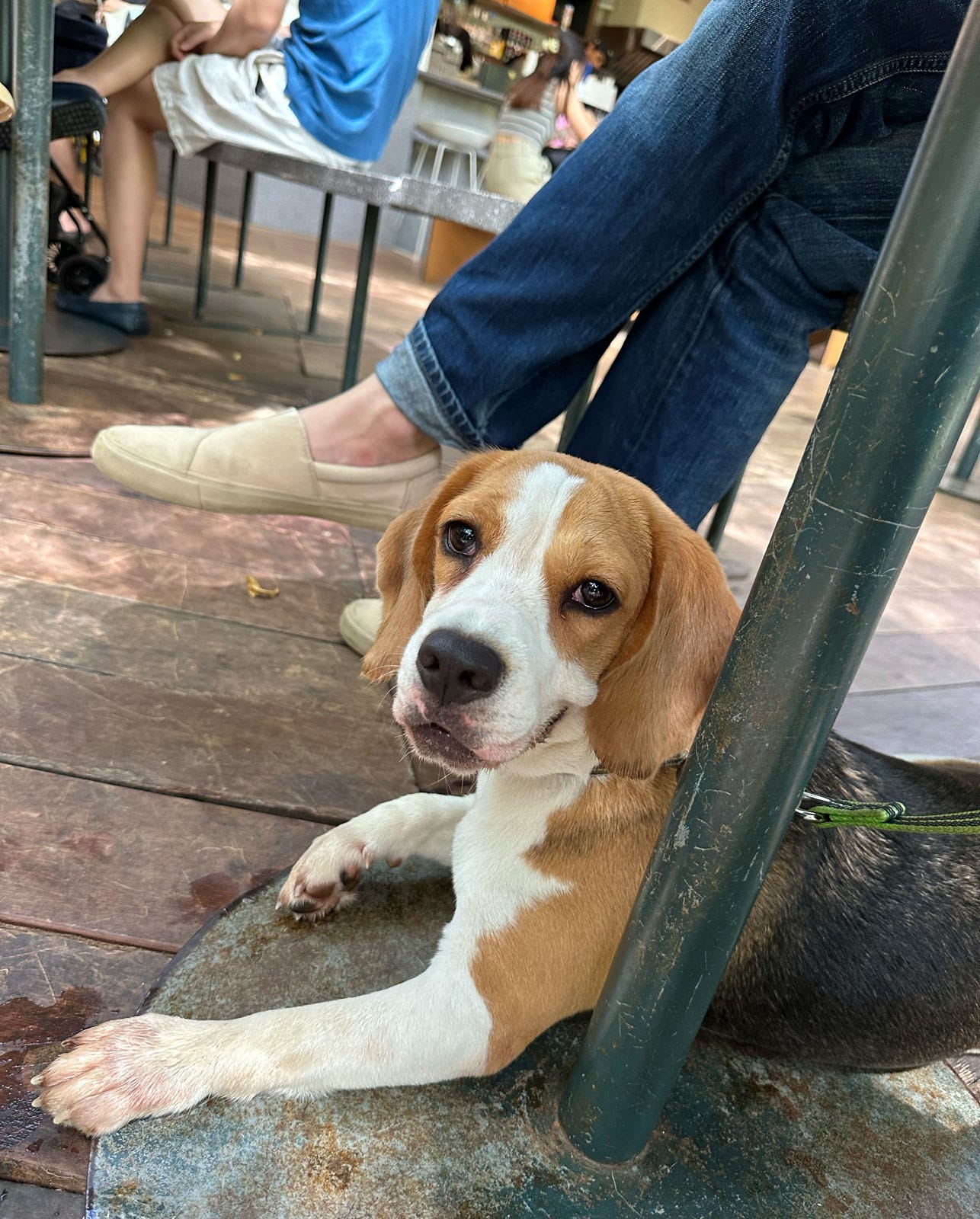
So happy to be reunited with our dogs! Here’s the more manageable of the two (only because she’s smaller), which means she gets more photos 💛
Until the next,
E.
Thanks for the shoutout, Emily! Hope you can get some proper rest and fully recharge for the eventful dragon year ahead. 💚🐲